Markup calculator
Find out what to charge for a part or a whole job – and see the profit and margin behind the price.




How to calculate markup
Markup examples at $100 cost
| Markup | Cost | Selling price | Profit | Margin |
|---|---|---|---|---|
| 20% | $100 | $120 | $20 | 16.7% |
| 25% | $100 | $125 | $25 | 20.0% |
| 30% | $100 | $130 | $30 | 23.1% |
| 40% | $100 | $140 | $40 | 28.6% |
| 50% | $100 | $150 | $50 | 33.3% |
| 75% | $100 | $175 | $75 | 42.9% |
| 100% | $100 | $200 | $100 | 50.0% |
All rows at $100 cost. Margin = profit ÷ selling price.
Working backwards? Type the price you charge and the cost you paid into the calculator – the markup and margin fill in.
Markup vs margin
Markup is profit divided by cost; margin is profit divided by price, so margin is always the smaller number – a 30% markup is a 23% margin. To convert: margin = markup ÷ (1 + markup), markup = margin ÷ (1 − margin).
Markup to margin conversion chart
| Markup | Margin | Markup | Margin |
|---|---|---|---|
| 20% | 16.7% | 40% | 28.6% |
| 25% | 20.0% | 50% | 33.3% |
| 30% | 23.1% | 100% | 50.0% |
How much to mark up parts and materials
Most contractors mark up parts and materials somewhere between 35% and 100%, small parts by 150% to 300%, and big-ticket equipment by 20% to 50% (Build-Folio, Mr. HVAC). The exact number depends on the trade, the part's price, and whether it carries a warranty. The floor for a specialty contractor is 35% on the whole job – labor, materials, and subs together (Michael Stone, Markup & Profit).
Markup on labor
Mark up labor on what it costs you, not on your billing rate – a billing rate already has overhead and profit in it. The loaded labor cost is wage plus payroll taxes, workers' comp, and benefits; in construction those extras add about 44 cents on every wage dollar (BLS, June 2026). A tech paid $30 an hour costs you about $43.
Not sure what your hours cost? How much to charge as a contractor walks through the rate side.
How to save your markup in a price book
Take the default job in the Parts + labor mode: a $250 part marked up 50% and $150 of labor marked up 40%. The blended markup of 46% clears the 35% floor Michael Stone sets for specialty contractors.
| Line item | Price |
|---|---|
| Parts – $250 cost + 50% markup | $375 |
| Labor – $150 cost + 40% markup | $210 |
| Job price – $400 cost, 46% blended markup | $585 |
| Profit / margin | $185 / 32% |
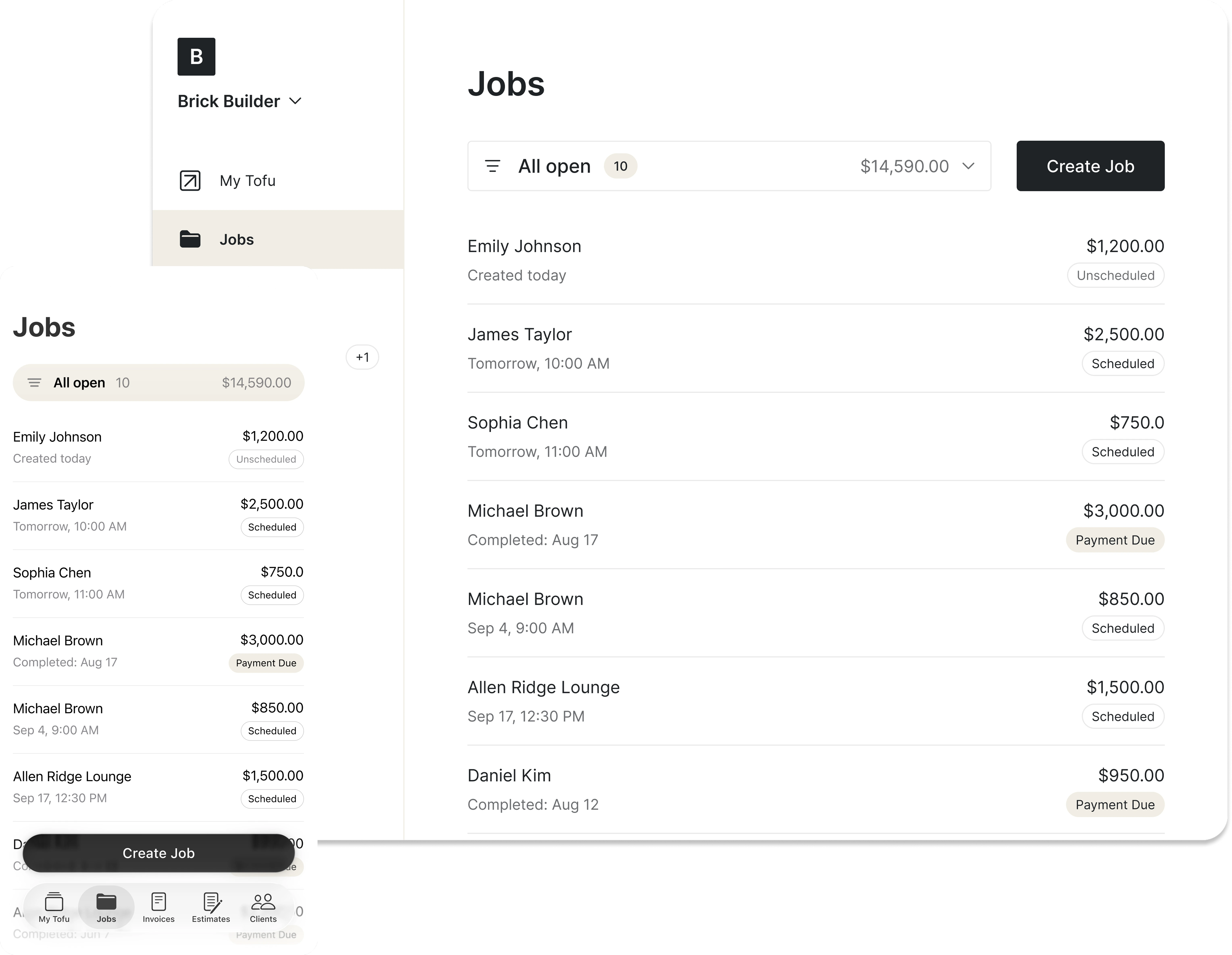
That is one estimate. The problem is the next hundred: every tech rounding differently, every quote rebuilt from scratch. In Tofu, marked-up parts live in the price book as items with a set price. Techs pick the item, the estimate is right, and the invoice matches it.
.png)
Check out more free resources
Free estimate generator
Turn the price above into a branded estimate with parts and labor line items.
Open the tool
→
Free invoice generator
Bill the same marked-up numbers you quoted – no retyping.
Open the tool
→
HVAC estimate templates
Ready-made estimates with parts and labor lines for HVAC jobs.
Browse templates
→
How much to charge as a contractor
The rate side of pricing: what pros bill per hour and per job, from real invoices.
Read the guide
→
Markup calculator FAQ

Price the part.
Send the estimate.
Run the job.
Try Tofu for free