Junk removal invoice templates
Invoice templates designed for junk removal pros
Junk removal is fast, physical work – and the paperwork shouldn't be slower than the haul. You're pricing by how much of the truck a load fills, paying dump fees, and juggling single-item pickups with full cleanouts. A generic one-off invoice wasn't built for that.
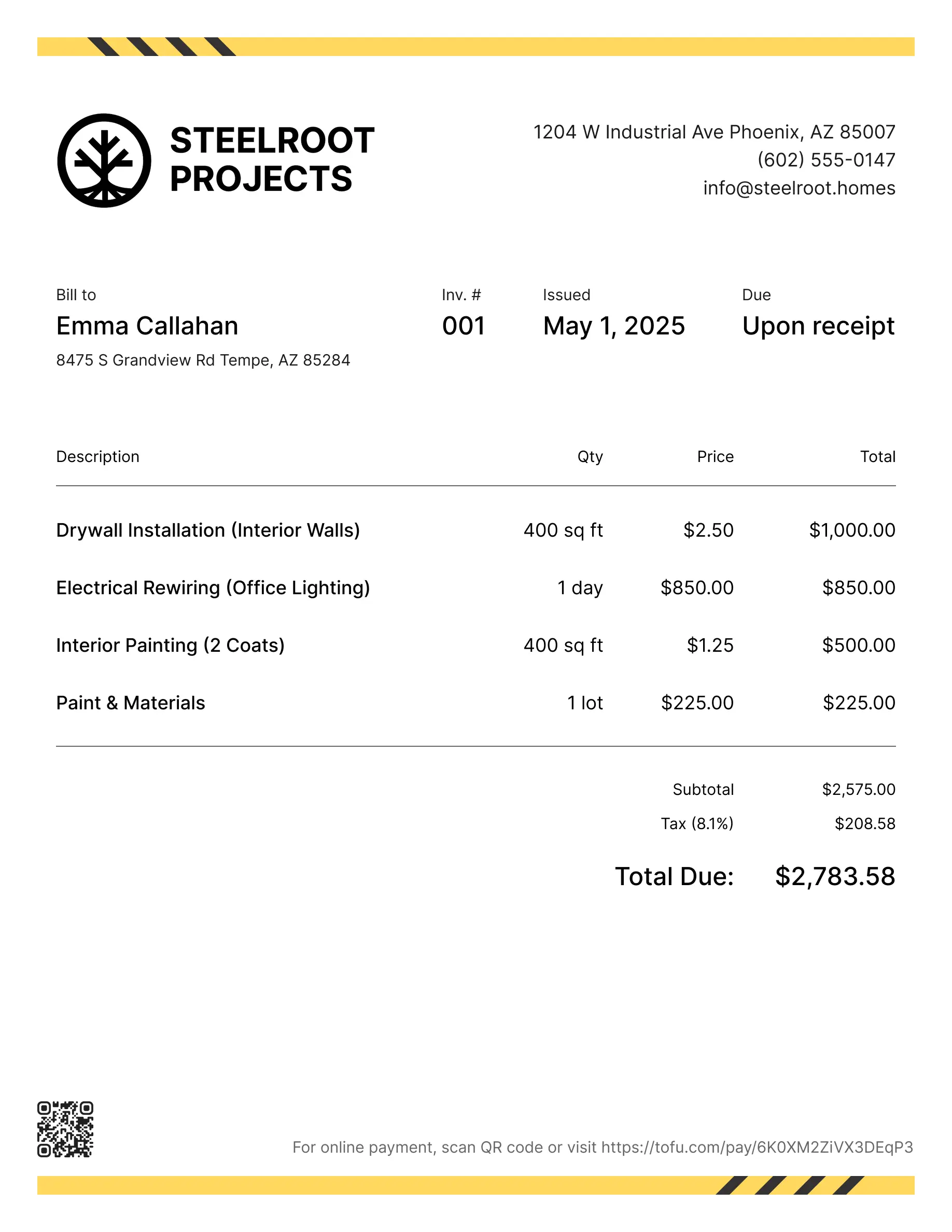
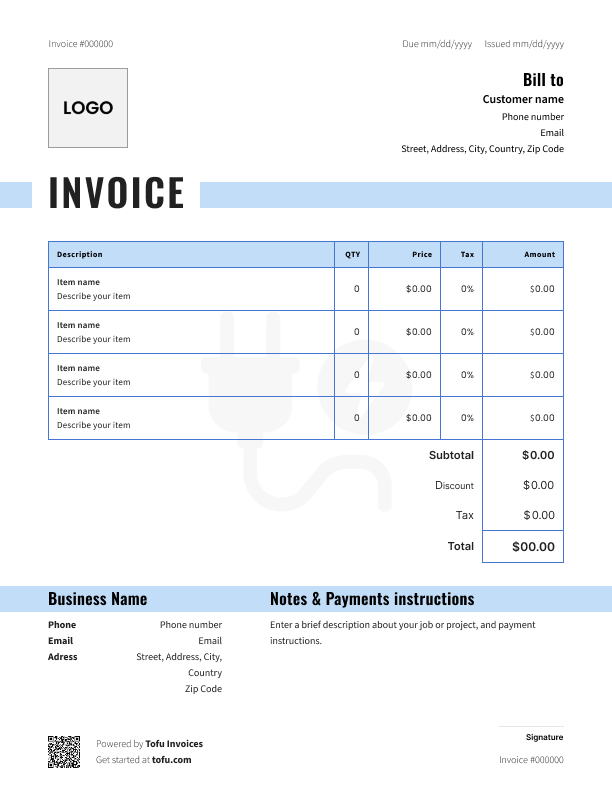
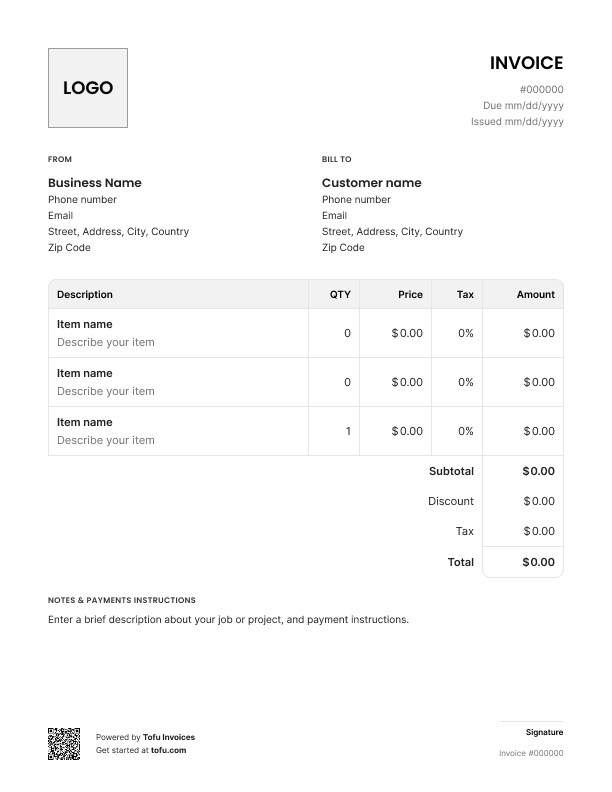
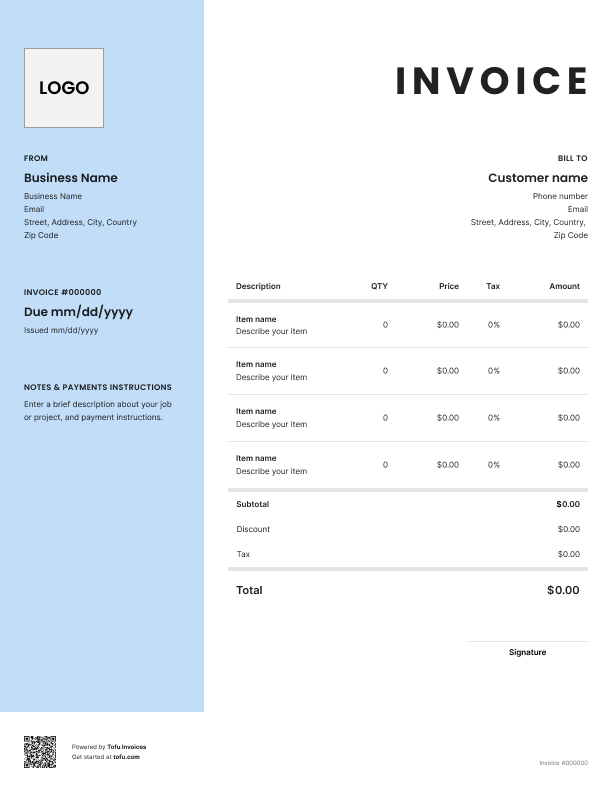
A junk removal invoice template gives you a structure that covers all of it. This guide walks you through what fields to include, how to create a junk removal invoice, and how professional invoices help every hauling business get paid faster and avoid disputes.
What to include in a junk removal invoice template
Every junk removal invoice needs the same core fields to be complete and clear. Here's what a solid junk removal invoice template includes. Missing even one can slow down payment or create confusion with clients.
Most invoice templates cover the basics, but junk removal jobs need a few extras. Start with these:
- Invoice number – unique ID for record-keeping and easy reference
- Company and client information – your business name, client's name, and service address
- Contact information – phone, email, website for both sides
- Services provided – exactly what was hauled: load size, big-ticket items, labor
- Service date – when the pickup or cleanout happened
- Due date – Net 15 or a specific date, no ambiguity
- Payment terms – accepted methods, autopay, any late fees
- Total amount due – final number, clearly stated
Cover all of these and clients can't claim they didn't understand the charges.
Junk-removal-specific fields that generic templates miss
Standard invoice templates skip the details that matter on a hauling job. Make sure yours includes:
- Volume-based line items – an eighth, a quarter, a half, or a full truck load, so the client sees exactly what they paid for
- Per-item charges – mattresses, refrigerators, and other appliances usually carry their own rates because of disposal rules
- Disposal and dump fees – pass landfill and transfer station charges through as their own line, not hidden in the total
- Labor and access surcharges – stairs, long carries, and heavy single items take extra time and deserve their own line
- Before-and-after photos – proof the space was cleared, useful for landlords and property managers
- Donation and recycling notes – note what was donated or recycled; some clients need it for taxes
These fields keep charges clear and cut down on "what am I paying for?" questions after the truck leaves.
How to create a junk removal invoice
Start after the scope and estimate are locked in. Invoice for what actually happened, not what you estimated.
- Pull up your free junk removal invoice template – don't start from scratch every time
- Fill in company and client details – including the service address, which may differ from the billing address
- Add an invoice number – sequential numbering keeps your financial records clean
- Write a clear description of the services provided – be specific: "1/2 truck load, garage cleanout, mattress and fridge" not just "junk removal"
- List a clear breakdown of the services – load size, per-item charges, labor, and dump fees as separate line items
- Apply any prepayment or credit – subtract it clearly so the remaining balance is obvious
- Set your due date and send the invoice promptly – ideally before you've left the curb
💡 Pro tip: Send the invoice from the job site with a payment link. The client just watched the truck leave – that's when invoices get paid fastest.
Customizing your junk removal invoice template
A one-size template doesn't fit every job. A customizable invoice saves you time, so take a few minutes to tailor it:
- Add your company logo and brand colors, a branded invoice looks professional, not like a generic spreadsheet
- Adjust service description fields for the job type – single-item pickup, full cleanout, and light demolition debris each need different detail
- Add per-item and dump fee lines where relevant
- Include payment instructions – bank transfer, check, autopay, or online payment link
A branded invoice makes clients take your due date seriously.
Your next invoice is 60 seconds away
Open Tofu, add the details, send a pay link. Your client gets it while the work is still fresh.
Rated excellent on review platforms

Absolutely amazing! It’s saves so much time and it gives you the professional touch needed to make you look good!
★ ★ ★ ★ ★
Tony W., TrustpilotTofu works with Stripe for on-site card payments, lets me turn estimates into invoices, and instantly syncs jobs, photos, and client notes offline.
★ ★ ★ ★ ★
Tofu user, G2
I use Tofu for my cleaning business, and it solves so many problems for me. I consider it a complete success for myself and my employees.
★ ★ ★ ★ ★
Marjorie N., G2Easy to use and straightforward! Been using it for over a year now!
★ ★ ★ ★ ★
Manuela M., TrustpilotI need some basic features like send estimate, invoice, track my jobs and get money. Tofu is good for that.
★ ★ ★ ★ ★
Tofu user, G2I love it 10 out of 10 would highly recommend to anyone
★ ★ ★ ★ ★
David M., CapterraJunk removal invoice template formats: PDF, Word, Excel and more
There's no single right format. It depends on how you work:
- PDF – easy to send by email, can't be edited by the client, looks clean and professional
- Microsoft Word – easy to customize text, good for contractors who prefer a simple document
- Microsoft Excel or Google Sheets – auto-calculates totals, handy when a job has load size, per-item charges, labor, and fees on separate lines
- Google Docs – accessible from any device, easy to share, works well for teams
- Online invoice generator – fastest option, often includes templates for junk removal built in
If you're just getting started, a free Excel or Word template works fine. As the business grows, an online invoice or invoicing software will save time and cut errors.
Look for a matching estimate template too, a consistent estimate and invoice keeps your process clean from quote to close.
Benefits of using junk removal invoice templates
Here's why contractors who use templates get paid faster:
- Save time – templates mean you're ready to invoice the moment work wraps up, no building from scratch
- Stay consistent – every client gets the same professional format, no missing fields
- Reduce errors – standard fields and pre-built calculations cut down on typos and math mistakes
- Bill repeat clients easily – property managers and realtors send steady work; a reusable template makes their invoices fast
- Get paid fast – clear documentation leaves no room for clients to dispute charges
- Look professional – a professional junk removal invoice builds trust and encourages on-time payment
- Build better financial records – sequential invoices keep your books clean at tax time
Start with a free invoice template and build from there. When volume picks up, most contractors move to invoicing software for automated billing, payment tracking, and client management.
Common junk removal invoice mistakes to avoid
These mistakes show up constantly on invoices for junk removal, and they all slow down payment:
- Bundling the load, labor, and dump fees into one line → Itemize everything separately so clients can verify costs
- Vague description of the services provided → Be specific: load size, items hauled, and the service date
- No invoice number or inconsistent numbering → Use a sequential system from day one (INV-001, INV-002)
- Forgetting to bill dump fees or per-item surcharges → Track them per job and add them as separate line items
- No photos attached for landlords and property managers → Attach before-and-after photos as proof the space was cleared
- Waiting too long to send → Invoice from the curb – same-day invoices get paid fastest
Missing details doesn't just look unprofessional. It makes disputes harder to resolve and creates gaps in your own records.
Invoices are just the start
Every client, job, estimate, and payment lives in Tofu – ready to pull up in seconds, wherever you are.
FAQs
Everything you need to know about the product and billing

Still have questions?



Create the perfect invoice for your business
Get started for free