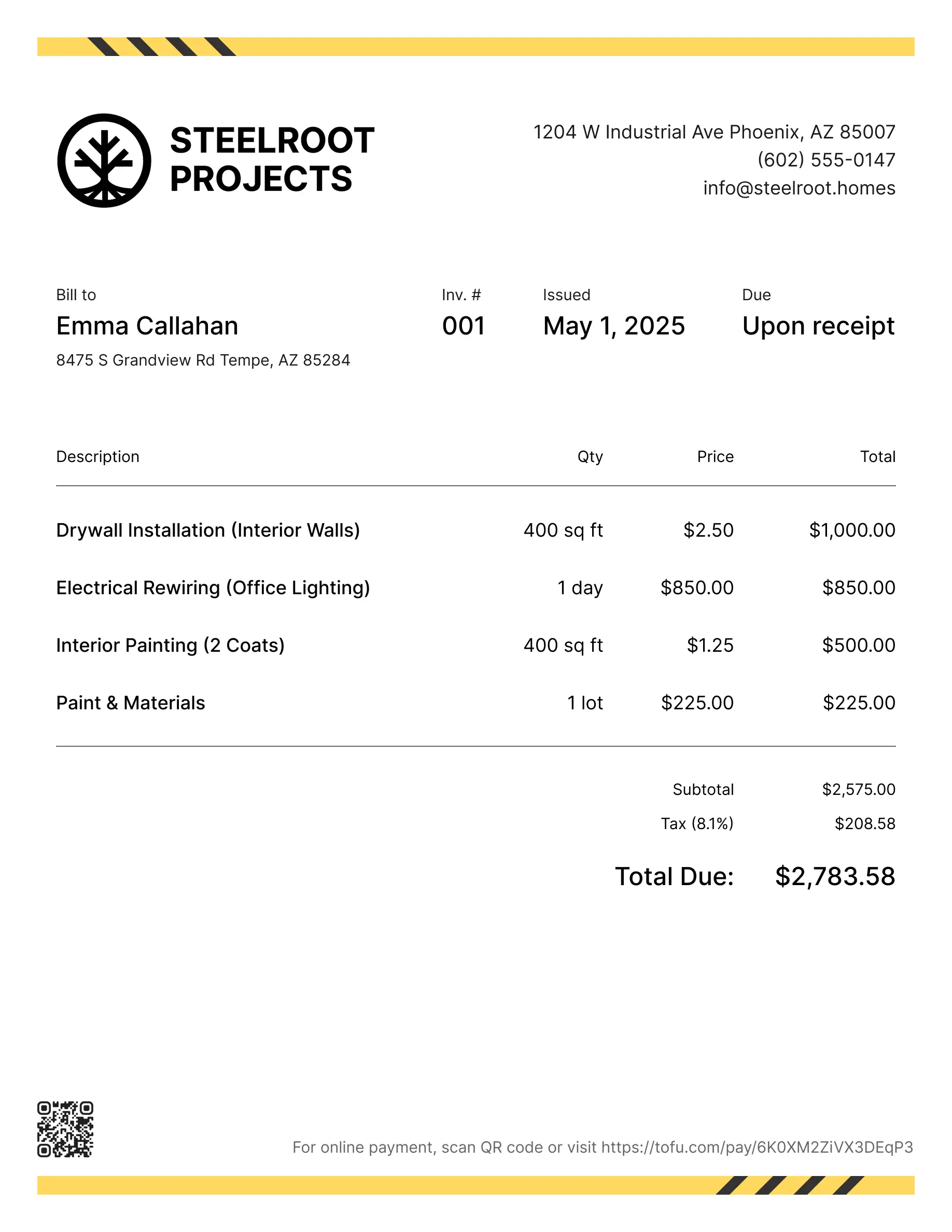
Electrical estimate templates
Pricing electrical work is tricky. One day it's swapping outlets, the next it's wiring a commercial build-out. Without a consistent document, every bid feels like you're starting from scratch – and that's how electricians lose jobs or eat costs they should've billed for.
A free electrical estimate template fixes that. It gives you a clean format you can reuse on every job, so your numbers add up and your client knows what they're paying for. The result: clearer electrical estimates, faster approvals, fewer disputes, and a smoother workflow from bid to invoice.
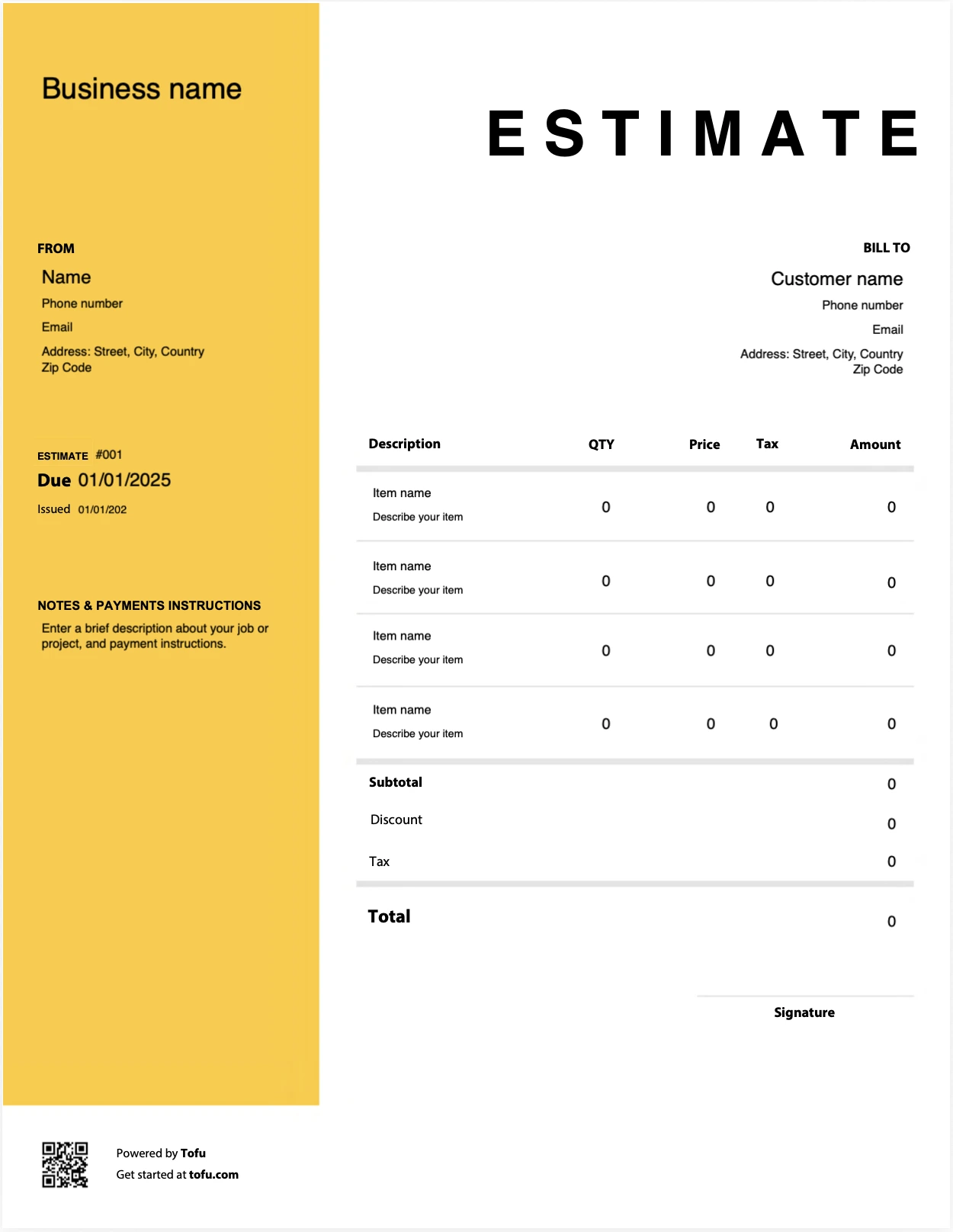
Electrical invoice templates
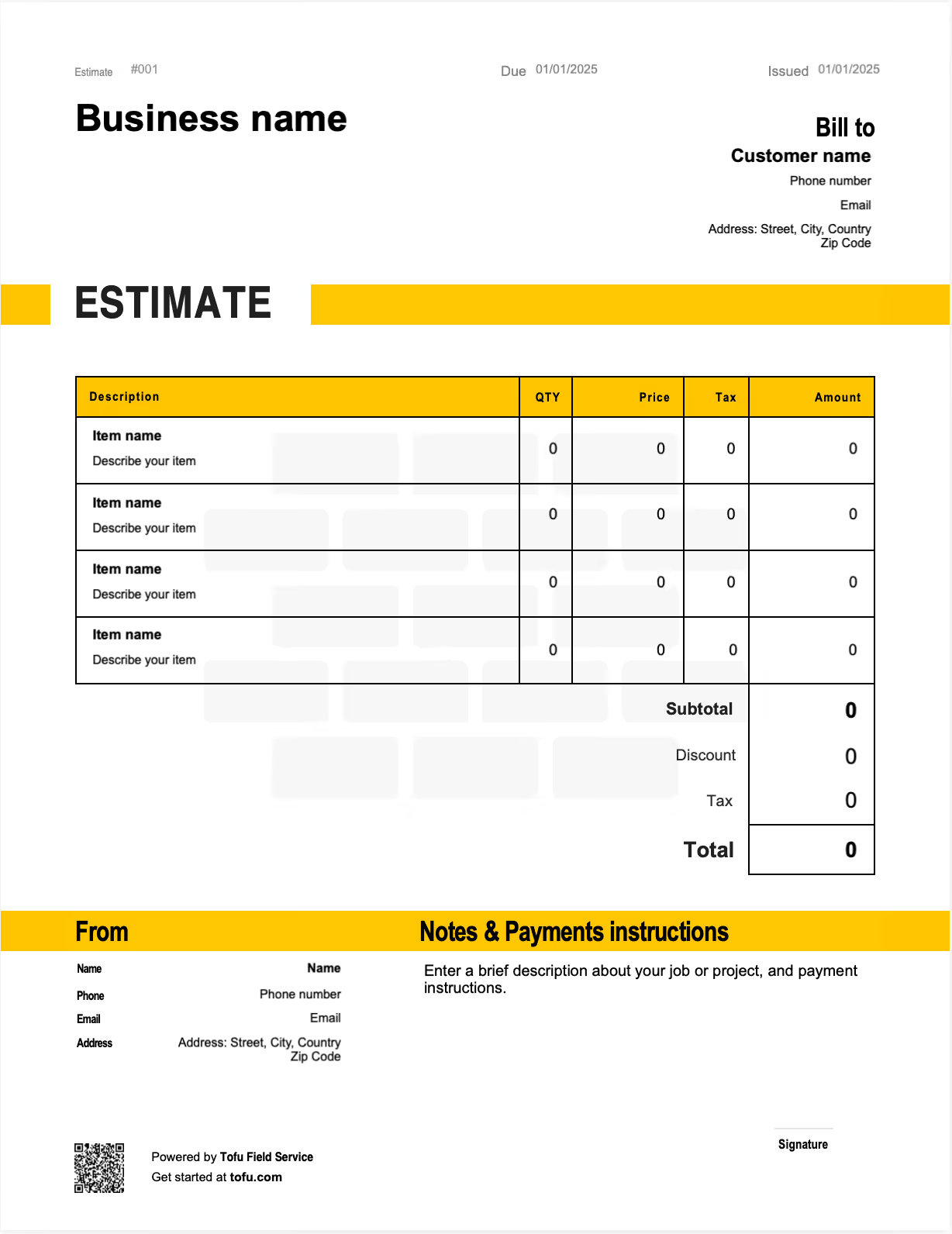
What to include in an electrical estimate template
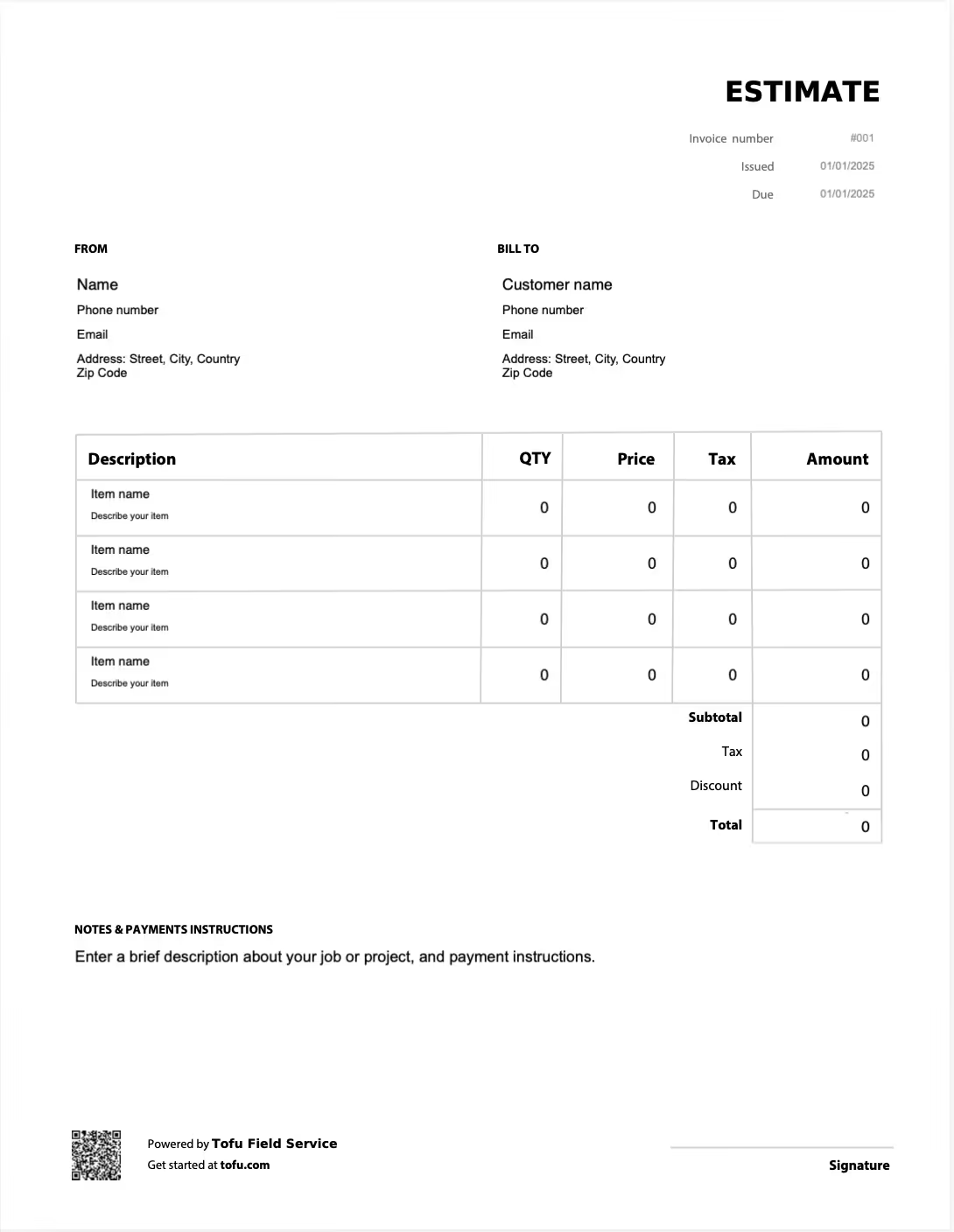
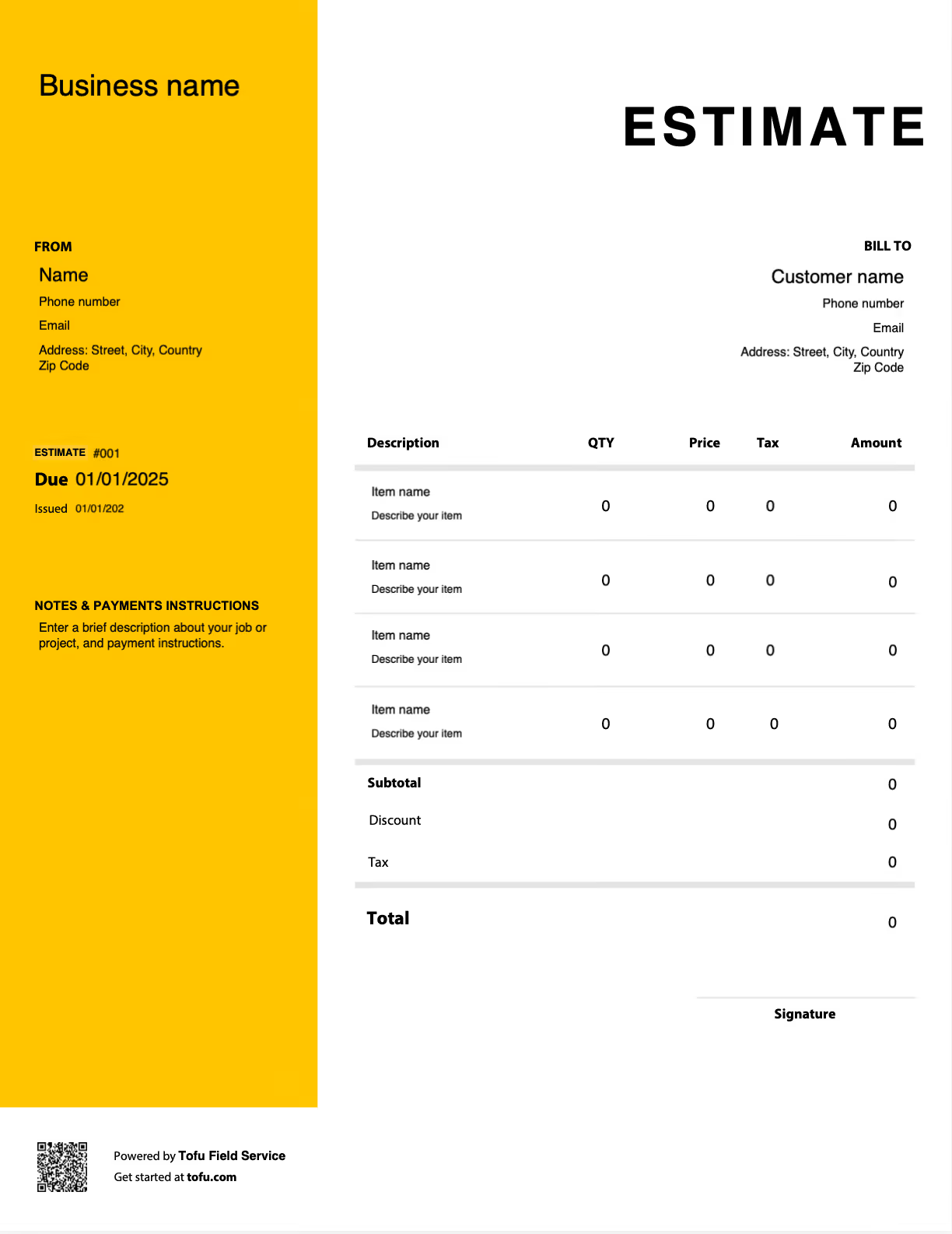
A solid bid form covers everything a client needs to say "yes" – and everything you need to protect your margins. Skip a field and you're chasing information later or arguing about it after the work is done.
Here are the essential fields every free electrical estimate template should have:
- Business name and contractor info, like ABC Electric, license #12345, to identify who's doing the work
- Client information that ties the bid to the right job, such as homeowner name and service address
- Estimate number and date to track bids and set an expiration, e.g. EST-1042, valid 30 days
- Scope of work that defines what's included, like "replace 200-amp panel, install 6 circuits"
- Itemized line items that break out each material and labor charge, e.g. 100 ft of 12-gauge wire and 4 hrs at $95/hr
- Unit price and quantity to show the math behind every number, like 12 outlets at $18 each
- Markup that covers overhead and profit on materials, such as a 20% markup on parts
- Subtotal, tax, and total to make the final price easy to read, e.g. materials $640, labor $380, tax $82
- Payment terms that set the deposit, due date, and accepted methods, like 50% deposit and net 15 on completion
- Signature line to lock in approval before work starts, with client signature and date
Clear, itemized electrical estimates read as professional and leave no room for "I didn't know it included that." It's also the structure you'll carry over to the invoice.
Electrical-specific fields that generic templates miss
Generic construction forms don't cut it. They miss the details that protect you from scope creep and disputes. Make sure your document includes:
- Cable and conduit type, gauge, and total run length
- Permit and inspection fees as their own line
- Residential vs. commercial electrical specs (voltage, phase, amperage)
- Notes on conditions behind walls, attics, or crawlspaces
- Specs for any electrical systems being added or tied into
Every electrical contractor has been burned at least once by leaving these out – that risk is what good electrical estimates eliminate.
How to create an electrical estimate using a template
Once you have the format down, building a free electrical estimate is straightforward. Follow these seven steps to send accurate electrical estimates faster than the competition:
- Walk the site. Measure runs, count fixtures, check the panel, and note anything that'll affect project scope.
- Define the scope of work. Plain language so the client knows what they're getting.
- List materials. Wire, conduit, breakers, devices, fixtures – every part with quantities.
- Calculate material costs and labor costs separately. Don't lump them together. Clients want the breakdown.
- Apply your markup. Standard markup on materials covers overhead. Your hourly rate should already include profit.
- Set payment terms. Deposit, balance due, accepted methods.
- Review and send. Confirm the math and send for approval the same day.
💡 Pro tip: Always note conditions behind walls. If you find old cloth wiring or a hidden junction box, your costs change fast. A line saying "additional findings billed at time and materials" saves the conversation later.
The electrician who follows up with a clean bid within 24 hours wins more jobs than the one who takes a week.
Your next electrical estimate is 60 seconds away
Open Tofu, add the job details, send it for approval. Your client sees a clean, itemized estimate before you touch a single wire.
Rated excellent on review platforms

Absolutely amazing! It’s saves so much time and it gives you the professional touch needed to make you look good!
★ ★ ★ ★ ★
Tony W., TrustpilotTofu works with Stripe for on-site card payments, lets me turn estimates into invoices, and instantly syncs jobs, photos, and client notes offline.
★ ★ ★ ★ ★
Tofu user, G2
I use Tofu for my cleaning business, and it solves so many problems for me. I consider it a complete success for myself and my employees.
★ ★ ★ ★ ★
Marjorie N., G2Easy to use and straightforward! Been using it for over a year now!
★ ★ ★ ★ ★
Manuela M., TrustpilotI need some basic features like send estimate, invoice, track my jobs and get money. Tofu is good for that.
★ ★ ★ ★ ★
Tofu user, G2I love it 10 out of 10 would highly recommend to anyone
★ ★ ★ ★ ★
David M., CapterraChoosing the right format: PDF, Excel, or Google Sheets
The format you pick depends on how you work and how complex the job is.
PDF works best for a polished, locked-down document:
- Looks professional in the inbox
- Can't be edited by accident
- Easy to attach or print
Microsoft Excel (or any excel spreadsheet) is great for flexible math:
- Built-in formulas for totals, tax, and markup
- Easy to duplicate per job
- Works offline
Google Sheets is the move if you have a team or work from your phone:
- Cloud-based, so your crew sees the same numbers
- Accessible from any mobile app or browser
- Auto-saves across devices
For quick bids on smaller jobs, Microsoft Word or Google Docs work fine. For anything more complex, stick with Excel, Google Sheets, or PDF.
How to customize your electrical estimate template
A customizable electrical estimate template should look like your business, not a generic form. Spend an hour upfront and you'll never redo it.
Drop in your company logo, business name, license number, and contact details at the top. Build out two versions of the document for residential and commercial electrical work – pricing and scope language differ. Add or remove fields based on common job types: service upgrades, panel replacements, EV charger installs. Set your default rate and markup. Paste in your terms and conditions at the bottom.
Fields to customize include: logo, contact details, default rates, markup, payment terms, and disclaimers for your state.
Benefits of using electrical estimate templates
Templates aren't just paperwork. They're a tool for running a tighter business:
- Accuracy and consistency on every bid – same fields, same math
- Time saved every week – no rebuilding from scratch, which means more efficiency
- Fewer missed line items – the format prompts you for everything
- Faster approvals – clean, professional electrical estimates get signed faster
- Better win rates that help you win more jobs – a clear bid beats a number on a notepad
- Tighter profit margin tracking – when materials and labor are split out, you see where you're making money
Free estimate templates are a solid starting point, and electrical invoice templates are essential when you're getting billing under control. Once you're running high volume, most contractors graduate to estimating software or electrical contractor software that auto-calculates pricing, manages a dashboard of bids, and pushes the approved quote into the invoice. That's where your workflow tightens up.
Get your free electrical estimate, plug in your numbers, and start sending electrical estimates that win more work.
Common electrical estimating mistakes to avoid
Even experienced contractors make these mistakes on their electrical estimates. Each line item creates friction with clients or eats into your margin:
- Lumping materials and labor together. Fix: separate every charge so clients see the breakdown.
- Forgetting to itemize cable and conduit runs. Fix: list type, gauge, and footage on their own lines.
- Leaving out permit and inspection fees. Fix: add a dedicated entry.
- Vague scope of work. Fix: write what's included and what isn't.
- Skipping terms and conditions. Fix: paste them at the bottom of every bid.
- Sending the bid days after the walkthrough. Fix: send within 24 hours. Speed wins.
Get accuracy and precision right the first time and you'll send an accurate estimate every job.
Estimates are just the start
Every client, job, estimate, and payment lives in Tofu, ready to pull up in seconds, right from the panel.
FAQs
Everything you need to know about the product and billing

Still have questions?



Create the perfect estimate for your business
Get started for free